MicroZoo
A tiny zoo, a huge experience.
Compact, storefront-sized zoos with rotating animal exhibits. Affordable, intimate, and educational wildlife encounters for families: no sprawl, no sleeping animals, no $60 tickets.
Find Your Local MicroZoo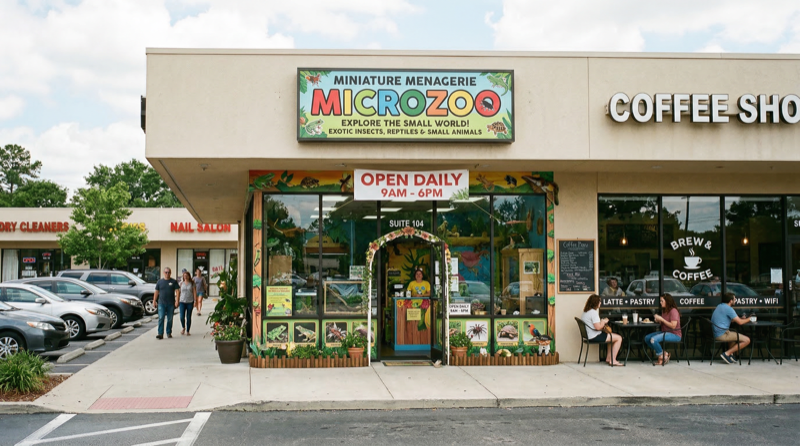
A tiny zoo, a huge experience.
Compact, storefront-sized zoos with rotating animal exhibits. Affordable, intimate, and educational wildlife encounters for families: no sprawl, no sleeping animals, no $60 tickets.
Find Your Local MicroZoo
The Problem
For families with young kids, a trip to the zoo means long walks, tired legs, sleeping animals, and a hefty price tag. There has to be a better way to experience wildlife up close.
Sprawling grounds leave kids tired and parents frustrated long before the visit is over.
Visit at the wrong time and every exhibit is empty cages and napping creatures. A major letdown.
Traditional zoo admission costs a family of four over $200 after tickets, parking, and snacks. That is steep for a maybe-great experience.

The Solution
MicroZoo brings wildlife encounters into your neighborhood. Small spaces, big experiences, and animals that are always awake and ready to meet you.

Fits in a strip mall or shopping center. No sprawling grounds needed. Park, walk in, and you are surrounded by animals within seconds.
Like your favorite cookie shop, the lineup changes every few weeks. Foxes one month, lemurs the next. There is always a reason to come back.
An impulse-friendly price point that lets families visit regularly instead of saving up for one big trip a year.
Feed the animals, learn about their habitats, and get closer than any traditional zoo would ever allow.
What Makes Us Different

Mammals rotate on a schedule posted weekly. Follow us on social media to find out which animals are visiting your local MicroZoo next.

Year-round exhibits with tortoises, tropical birds, reef fish, and insects provide a reliable baseline of wonder every single visit.

Located in shopping centers and strip malls, MicroZoo fits into your Saturday errands. No separate trip needed, just stop in for an hour.

Interactive feeding sessions, educational signage, and weekend workshops teach kids (and adults) about animal habitats, conservation, and biology.
The Opportunity
Between expensive full-scale zoos and sketchy roadside petting zoos lies an enormous untapped middle tier. Families want regular, affordable animal experiences. MicroZoo delivers exactly that, with a franchise model built for rapid expansion.

Business Plan
Multiple revenue streams keep the business healthy. Low-cost admission ($3 to $5) drives volume. Annual memberships and birthday party packages increase lifetime value. Gift shop sales, animal feeding tokens, and school group bookings round out the mix. Franchise fees from new locations create recurring corporate revenue.
Launch one flagship location in a family-dense suburban market. Partner with local animal rescues and wildlife educators to source rotating exhibits at low cost. Build social media buzz around weekly animal arrivals. Once unit economics are proven, document the playbook and begin franchising to adjacent cities.
MicroZoo sits in a tier no one else occupies. Traditional zoos are too expensive and distant. Petting zoos lack professionalism and variety. Pet stores lack educational programming. The rotating exhibit model (inspired by trending bakery chains) drives repeat visits in a way fixed-exhibit competitors simply cannot match.
First location including buildout, animal habitats, permits, staffing, and initial operating capital.